Remote work
Do remote jobs pay less? Yes, 13% less, and remote work isn't the reason
By Hotfix Team
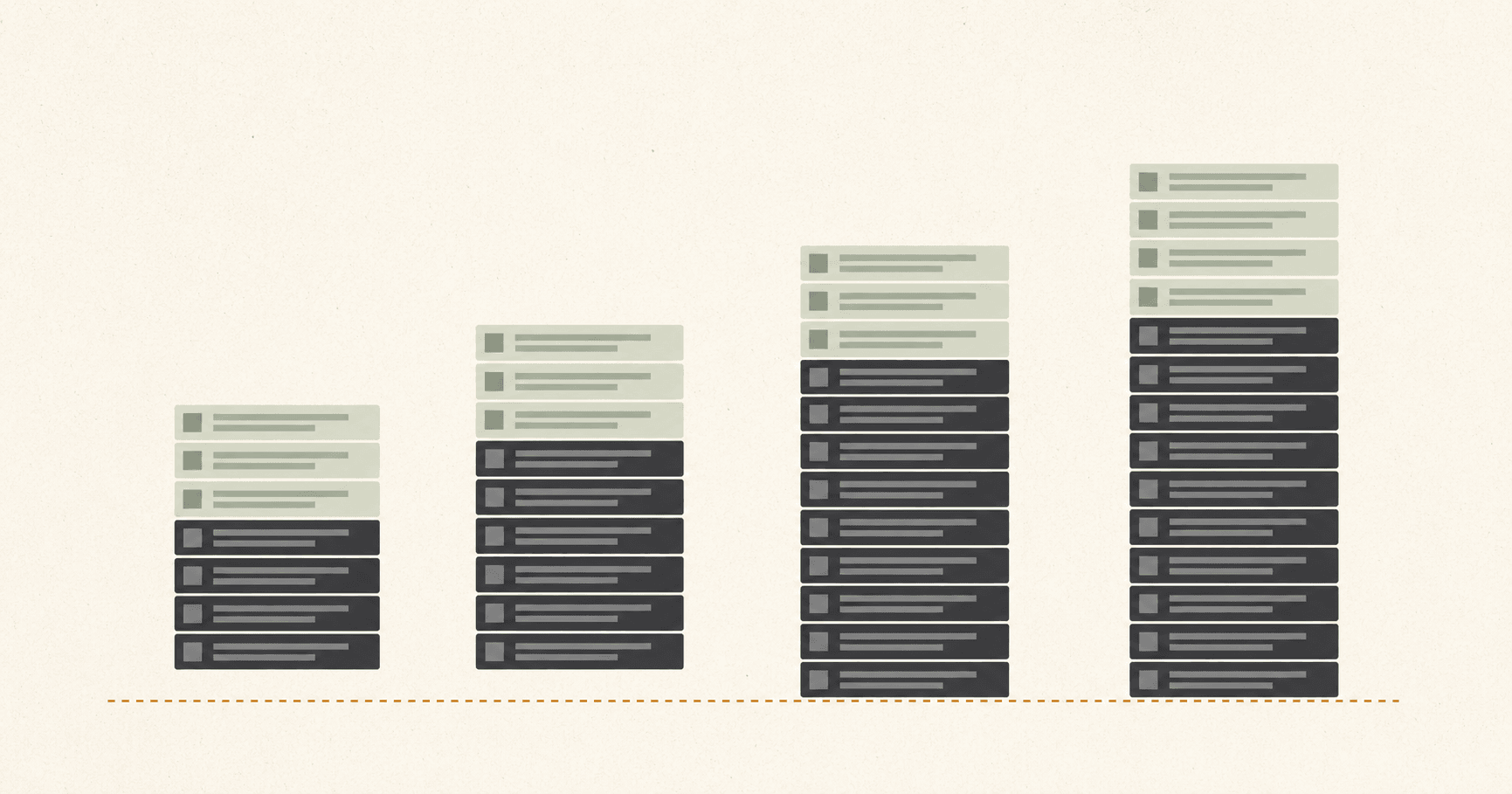
Do remote jobs pay less in tech? Yes. Remote engineering listings advertise about 13% below onsite ones at entry and mid level. But the discount is not attached to remote work, and a job seeker who reacts by dropping the remote filter is solving the wrong problem.
We sorted employers into four groups by their own median advertised engineering pay. The lowest-paying quarter posted 50.1% of their engineering roles as remote. The highest-paying quarter posted 29.4%. The gradient runs cleanly through all four groups, and it is the whole story.
Then we ran the comparison the other way: remote against onsite listings at the same company, at the same seniority level. The gap there is 0.3%, and the true figure sits somewhere between a 2.6% discount and a 2.0% premium. Nothing close to 13% survives.
The remote filter is not pricing your commute. It is sorting you into a cheaper part of the employer market.
The companies that pay least hire remote most
Of the 213 companies with eight or more engineering listings in this window, the cheapest quarter post remote roles at roughly 1.7 times the rate of the most expensive quarter. Narrow the same test to senior engineering only and it steepens: 54.6% remote at the bottom against 27.8% at the top.
This is what produces the headline gap. Remote listings are drawn disproportionately from employers who pay less for every role they post, remote or not.
What we measured
Hotfix ingests listings directly from applicant tracking systems including Greenhouse, Lever, Ashby, and Rippling. This analysis covers US listings in eight core engineering functions (backend, frontend, fullstack, DevOps, security, machine learning, data, and mobile) posted between January 1 and July 27, 2026, restricted to listings carrying a complete advertised salary range above $40,000. Pay figures are the midpoint of the advertised range. Every comparison uses medians.
The within-company test pairs each company against itself: for a given employer at a given seniority level, we compare the average advertised midpoint of its remote listings against its non-remote listings, then look at the distribution of those gaps across 204 company-and-level pairings at 128 companies.
The raw gap, which is what everyone else reports
Compare remote against onsite across the whole market and the penalty looks real and large:
| Level | Remote | Onsite | Gap |
|---|---|---|---|
| Entry | $147,500 | $170,000 | -13.2% |
| Mid | $180,000 | $207,500 | -13.3% |
| Senior | $191,950 | $205,000 | -6.4% |
| Staff | $237,263 | $242,500 | -2.2% |
JobLeads published a study in 2026 running exactly this comparison across 121,370 US tech postings and reported a $33,525 divide, with almost 86% of tech roles paying less for remote. Their stated method is to average onsite pay and remote pay for each job title and compare, broken out by seniority. It contains no control for which employer posted the job, and their own limitations section confirms it.
That is the flaw. Averaging across the market compares Anthropic's onsite listings against Mozilla's remote ones and reads the difference as a remote penalty.
Do remote jobs pay less at the same company?
No. Comparing an employer's remote listings against its own onsite and hybrid listings at the same level, the average gap is 0.3% in favor of onsite. Half the companies in the sample land between a 7.9% discount and a 5.8% premium, scattered evenly on both sides of zero.
The spread across individual employers is wide, so this is not a claim that every company pays identically regardless of work mode. It is a claim that there is no systematic remote discount, and that the market-wide figure cannot be read as one.
The mechanism has names, and most of them are AI labs
The top of the tech pay distribution right now is frontier AI, and frontier AI does not hire remote.
| Company | Median advertised | Remote share |
|---|---|---|
| Thinking Machines Lab | $412,500 | 0.0% |
| Anthropic | $402,500 | 1.1% |
| OpenAI | $315,000 | 6.5% |
| xAI | $310,000 | 8.0% |
At the other end, Mozilla posts a $149,500 median with every engineering listing remote. Kraken posts $165,600, also entirely remote. Lumin Digital posts $167,500 the same way.
Drop eight AI labs from the dataset and the mid-level gap falls from 13.3% to 7.7%, while the staff-level gap flips from a 2.2% discount to a 2.0% premium. The senior-level gap does not move, so these companies are a large part of the effect rather than all of it. The broader pattern is the quartile gradient above, and AI labs sit at the sharp end of it.
This connects to something we found earlier: AI engineering roles carry a 6% to 11% salary premium over other engineering work at the same level. The employers paying that premium are also the ones least willing to hire outside the office.
High pay and remote work are not incompatible
The gradient is a sorting effect, not a law, and the exceptions are the most useful names in this analysis for anyone deciding where to apply. Pinterest posts a $270,990 engineering median with 57.0% of listings remote. Square posts $256,000 at 56.4%. Both clear the median pay of the top quartile while hiring remote at roughly twice that quartile's rate.
If you want remote work without the pay gap, these are the employers to find. Our remote senior software engineer listings and roles with disclosed salary ranges are the fastest way to filter for them directly.
Entry-level candidates get squeezed on availability, not price
Remote share of engineering listings rises with seniority and then falls back at the top:
Entry-level engineers face the thinnest remote market and the widest raw gap at once. That compounds a problem we measured in June: only 1 in 10 tech engineering jobs is open to entry-level candidates at all. For early-career job seekers, the remote filter cuts an already small market by more than three quarters.
What this analysis cannot show
These are advertised ranges, not accepted offers. A within-company comparison cannot see a location-adjusted band applied after the offer, so a company posting one national range may still pay a hire in Boise less than a hire in San Francisco. Our finding is about what employers advertise. If location adjustment happens later in the process, it is invisible here.
Worth weighing against that: Stanford's WFH Research puts what workers will trade for two or three remote days at about 5% of pay, with more than half valuing it at 5% or more. If employers wanted to price a remote discount into their listings, there is a well-measured willingness to pay sitting there. In advertised ranges, they are not taking it.
Sources
Find tech jobs worth your attention.
Browse current roles by experience, salary, and how you want to work.